
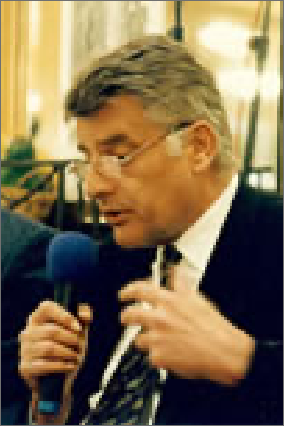
Jean Luc Lamotte
Anthropologist and essayist
I rather quickly understood that the “human sciences” taught in our “Faculties of Arts and Humanities” were still, and still remained, literature, even though they had separated, shortly after my studies, from the Philosophy degree.
It seems that these “human sciences”, taught until recently in our Faculties of Arts, had an object: man with a lowercase letter, no longer Man with a capital letter, as was the case in a humanism that seems endlessly to be dying. And that is true.
But how did these literary specialists in “human sciences” manage? By dressing man up in an attempt to turn him into an object that might appear scientific. What they took from science was not its demand for formalisation, but its language and appearance, nothing more, nothing less.
Thus, certain psychologists, calling themselves “neuropsychologists”, began wearing white coats, having laboratories, measuring, computerising, and so on. Yet in their “labs”, it is certain that they were indeed trying to verify “data” — but data that had never been defined!
Sociologists, for their part, began producing statistics! But since they too had no model underlying the phenomena they described, they could obviously do no more than describe them, rather than explain them. They described with numbers — which, after all, looks more scholarly. But statistics are like computing. If the data fed into the computer are foolish, then the computer will process those foolish things, since the computer is ready to process anything. With statistics, it is exactly the same: to a foolish question, a foolish answer.
There remained one maverick “thinker”, whose name I have forgotten, who at the time was making much of his concept of complexity. I am not saying he is foolish, far from it, but he thinks that everything from the past must be wiped clean: “The lost paradigm is definitively lost, but I am going to invent everything!” The result is that he says nothing. So, like all literary minds, he takes refuge behind the complexity of man. “Studying phosphorus, fine! Analysing calves is already less easy, but compared with a man, a calf is still simpler. As for man, he is so much more complicated, more subtle, more refined!”
That is where I was in my journey when, some twenty years ago, I had the extraordinary good fortune to meet Jean Gagnepain and to become one of his disciples. In contact with him, I quickly understood that preaching a truly scientific knowledge of man required us to bring down the main obstacles to the advent of this new knowledge, beginning with those famous “Faculties of Arts and Humanities”. Indeed, if, for example, you look back to the Renaissance, you can see that humanism could only prevail once, under the blows of Rabelais and others, the lock of the Sorbonne had been broken. But at that time, yesterday’s “Sorbonicoles”, exactly like those of today, were trying to reform themselves, to adapt. Yet there were others, more lucid, who had understood that any reform was doomed in advance: one simply had to do something else. That is exactly what Jean Gagnepain had grasped.
In the age, then, which is no longer the age of humanism but the age of antihumanism — that is, of the treatment of man by man, which presides over the emergence of a true Science of Man — it is high time to become aware of the main obstacle to the advent of this new era. The problem of education, not only for tomorrow but already for today, required the liquidation of what remains of literary minds. Certainly, if literary minds have now become the enemies, it is after having been the finest jewel of the humanist university. But, as Marx said of the bourgeoisie, they were a necessary evil; they played their historical role, that of being, as I told you earlier, the pre-human sciences. From this point of view, the so-called “soft” sciences — psychology, sociology, political science — extend the historical role of literature, including philosophy, belles-lettres and history. This historical role consisted in placing man in cold storage so that, in the meantime, the so-called “natural” sciences could be dealt with.
What I mean is that these “soft” sciences are now giving way to the “hard” Science of Man, since the work of that still too little-known genius, Jean Gagnepain, who is the true founder of the experimental Science of Man. A word of explanation.
It was Freud who gave Gagnepain the idea of an explanatory clinic, in other words, a type of clinic that enabled him perpetually to call into question the theoretical model of man that he developed over nearly half a century. This is absolutely fundamental.
The Theory of Mediation is indeed what may rightly be called a clinical anthropology. And the mediationists, gathered under the name of the Rennes School, are at the same time the first in the world to place a firm wager on the need to establish a scientific approach to man, one that quite obviously gives itself both a theoretical model and a place of experimentation. In other words, the link between theory and clinic is so fundamental that one cannot separate one from the other… Except, as I shall most often do, for the convenience of exposition — and besides, one cannot do everything!
I have mentioned Freud, but that does not mean that Jean Gagnepain adheres unreservedly to psychoanalysis. He corrects its excesses. First, its excess of verbalism, because Freud confined his discovery of the unconscious solely to the level of representative consciousness, whereas there is also a technical “unconscious”, a social “unconscious” and an ethical “unconscious”; this is why Jean Gagnepain replaces the concept of the unconscious with that of the implicit.
The second corrective is the one he brings to the historicism in which Freud enclosed himself, the historicism of “stages”, “regression”, and so forth. If you like, Jean Gagnepain is not concerned with the Urszene, the “primal scene”, but with the Grundszene, the “fundamental scene”.
The second precursor recognised by Jean Gagnepain is Ferdinand de Saussure and his structural conception of the verbal sign. Ferdinand de Saussure’s discovery, from 1857 to 1913, was for Jean Gagnepain, as for many French intellectuals, a true revelation.
Finally, it was Marxist praxis that led Jean Gagnepain to the theory of incorporated rationality. In other words, this idea of praxis, borrowed from Marx, led him to posit the reality of the explanatory principle that is reason, not outside man, but within man. And this is precisely the difference between the so-called “human” sciences and the so-called “natural” sciences.
That said, and to conclude, I would like to say a word about my relationship with Jean Gagnepain. Generally speaking, I would say that the Master is neither someone we respect, nor someone with whom we break: we live from him. In other words, we never respect the Master, because respect is a sign of death. When I speak to you, I make Jean Gagnepain exist. But where am I myself? Ultimately, that is of no importance. This does not mean that the memory of Jean Gagnepain is not, in itself, worthy of the respect due to human genius, but he can only serve me personally, and you through me, insofar as we digest him, insofar as we make him our own affair. Under these conditions, there can be no question of stopping a Master at a given moment in history: that would indeed be to “nihilate” him, to borrow from Sartre.
I would add that the Master, if he is a Master of thought — something that has not existed in France for a very long time — has nothing of the professor about him; quite the contrary. Take Master Albert in the Middle Ages: when Master Albert fell out with the Sorbonne, he packed up his things and seceded, that is, he took up residence on the square in Paris to which he gave his name: Place Maubert. He set himself up there and gave his courses in the open air, and everyone followed him. He had charisma, he drew crowds, he thought, and freely.
Well, Jean Gagnepain, if you like, is the Master Albert of the Science of Man. You will therefore understand why his thought may disturb, even outrage, especially the academic world.
So much the better if this thought, which I shall try to transmit to you — if you do “us” the honour of following “us” — invites you to reflect.
Jean-Luc Lamotte died in the spring of 2015.